Ethics, quality and speed: rethinking the apparel industry | Ciel Textile Website
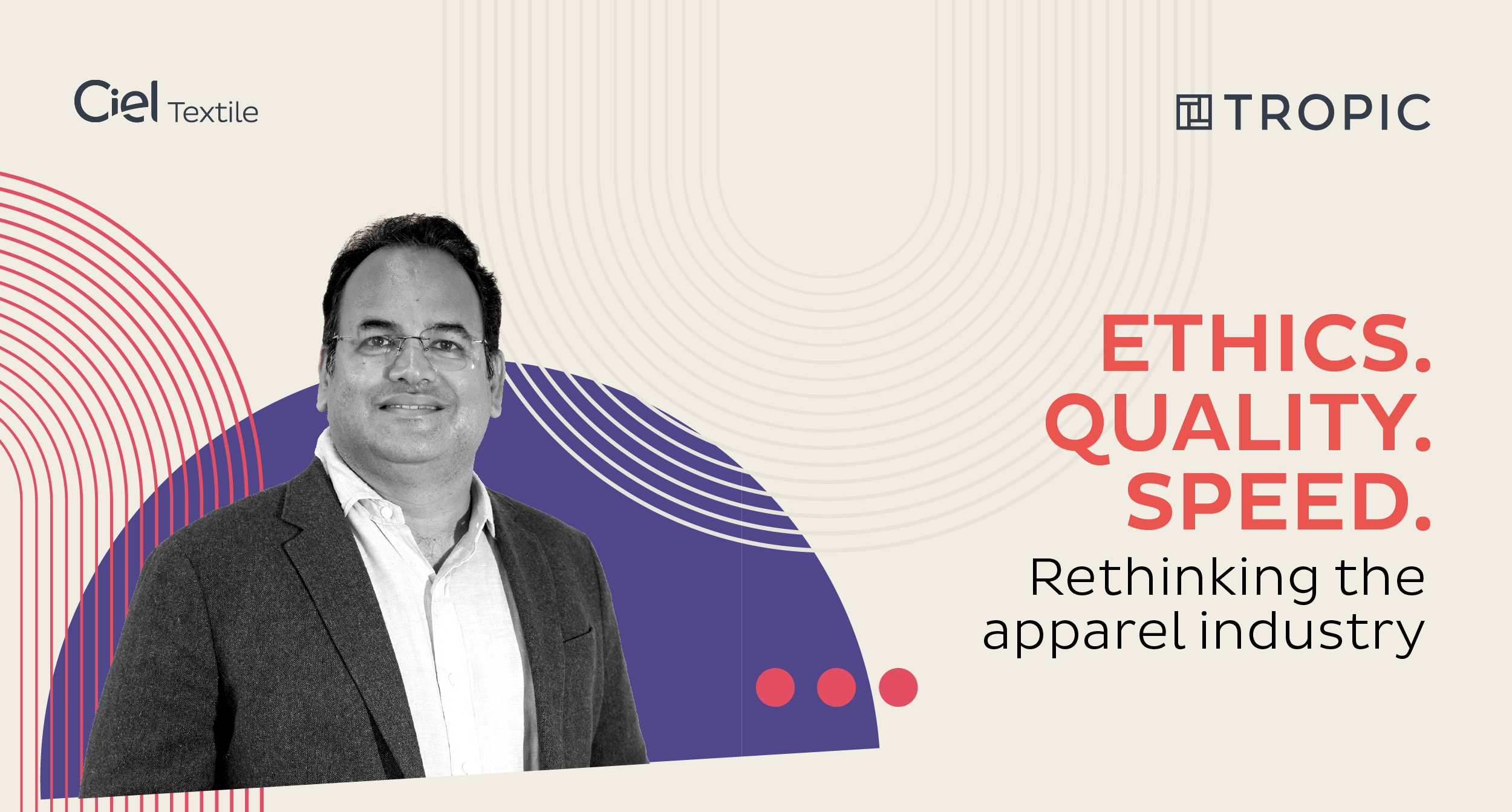
Let’s be honest. Customer expectations in apparel have changed completely.
Price alone doesn’t cut it anymore.
Quality is assumed. Speed is expected. And ethics are non-negotiable.
Over the years, I’ve learned that real customer satisfaction lives at the intersection of ethics, quality and agility. Take one away and the whole model starts to wobble.
Speed to market is no longer optional
Fashion doesn’t wait. Trends turn overnight, demand swings by the minute, and predictability is no longer something we count on.
To keep up, brands now rely on fast-react orders, small trial runs and quick follow-on programs. It’s a smart way to reduce work in progress and inventory while staying closely tuned to what the market is actually saying.
For us manufacturers, this means building supply chains that are agile, responsive, and dependable.
Speed is not about cutting corners. It’s about better systems, tighter partnerships and quicker decisions, all without compromising on standards. Fast, not sloppy.
Ethics beyond ticking boxes
Speed gets you noticed. Ethics earn you trust.
Compliance with local laws is the starting line. Today’s brands and consumers expect traceability, meaningful CSR initiatives and genuine human engagement. Circularity and frameworks like carbon credits are no longer nice to have. They are part of everyday business.
Then there’s the human side. Beyond audits and reports, there is a growing focus on direct engagement with workers. These efforts need care, respect and sensitivity, because dignity and trust are not things you can rush.
At Tropic India, ethics are not a checklist. They are a guiding principle that shapes smarter choices and stronger partnerships.
Listen. Think. Act.
When a key customer asked for a three to four week lead time from PO to ex-factory, we could have pushed back. Instead, we listened.
By partnering closely with a fabric mill, we made it work. We met the timeline, retained the customer, and ended up doubling volumes across multiple categories.
Listening, it turns out, is still a very effective strategy.
The bottom line
Strong ethics create the foundation for sustainable business. Build quality and speed on top of that, and customers notice. Over time, that trust becomes your biggest competitive advantage.
In an industry that moves as fast as ours, that advantage is worth more than any shortcut.
By Sandeep Raut, CEO, Tropic India